
 Fire Extinguishers
 Specials ...

 About Us
 Articles/Resources
To satisfy AS2444: Selection of portable fire extinguishers, you may need to Find a fire extinguisher by its Fire Rating: Australian Fire extinguisher ratings explained
Important things to note when reading this table:
Different types of fire risk require different types of extinguishers.
The weight of an extinguisher does not necessarily describe its fire-fighting ability, ie different brands of 4.5kg DCP extinguishers vary in their ability to put out fires. When comparing prices and value for money look at the ABE rating, not just the weight. The ratings you see below are only for the extinguishers we sell. All our DCP extinguishers use high performance powder, so their rating will usually be higher than our competitor's brand for the same weight
Class A Fire risks - Wood, Paper, Plastics, etc
| Rating needed | Our item rated | description |
| 1A | 1A:20B:C:E | 1kg DCP ABE |
| 1A | 1A:3F | 2 Ltr wet chemical |
| 2A | 2A:30B:C:E | 1.5kg DCP ABE |
| 2A | 2A:20B | 9 Ltr AFFF |
| 3A | 3A:4F | 7 Ltr wet chemical |
| 3A | 3A:20B | 9 Ltr Fluorine Free |
| 3A | 3A | 9 Ltr water |
| 3A | 3A:40B:C:E | 2.5kg DCP ABE |
| 4A | 4A:60B:C:E | 4.5kg DCP ABE |
| 4A | 4A:80B:C:E | 4.5kg DCP ABE Hi Performance |
| 6A | 6A:80B:C:E | 9kg DCP ABE |
 |
Class B Fire risks - Flammable Liquids
| Rating needed | Our item rated | description |
| 5B | 5B:E | 3.5kg CO2 |
| 10B | 1A:10B:E | 0.75kg DCP ABE |
| 20B | 1A:20B:C:E | 1kg DCP ABE |
| 20B | 2A:20B | 9 Ltr AFFF |
| 20B | 3A:20B | 9 Ltr Fluorine Free |
| 30B | 2A:30B:C:E | 1.5kg DCP ABE |
| 30B | 2A:30B:C:E | 2kg DCP ABE |
| 40B | 3A:40B:C:E | 2.5kg DCP ABE |
| 60B | 4A:60B:E | 4.5kg DCP ABE |
| 80B | 4A:80B:C:E | High performance 4.5kg DCP 80BE |
| 80B | 6A:80B:C:E | 9kg DCP ABE |
Class F Fire risks - Cooking Oils and Fats
| Rating needed | Our item rated | description |
| 3F | 1A:3F | 2 Ltr wet chemical |
| 4F | 3A:4F | 7 Ltr wet chemical |
What do the fire ratings mean?
The letters A, B, C, E, & F are 4 types of fires that are covered by these
fire extinguishers
These letters classify a fire mostly by the type of fuel that is keeping the
fire going.
Where an extinguisher is classified with more than one letter, it means it is
effective on more than one type of fire, eg 2A:30B:C:E
extingusher, could be used on a Type A fire, or a B fire, or a type C fire, or a type E fire
(it is sometimes referred to as an ABE extinguisher). The number in front of
the letter is used to compare the performance of an extinguisher as outlined
in AS/NZS 1850
For class A fires the numbers range from 1 to 10, for class B they are from
2 to 80, and for class F, they go from 1 to 4. With the exception of the water
extinguisher, all the other extinguishers are capable of putting out more than
one type of fire. Use the table above to choose the fire extingusher that is
best suited to your fire risks.
What are the fire types A, B, C, E, & F?
|
Fire Class
|
Description | Typical examples |
|
A
|
Wood, paper, plastics | wood, textiles, rubber, plastics and paper.Offices, warehouses |
|
B
|
Flammable liquids | petrol, oil, paint, petrol stations, cars |
|
E
|
Energised electrical | Switchboards, computers, toasters, fuse boxes, live electrical appliances |
|
C
|
Flammable Gas | All our ABE dry chemical extinguishers are now also rated for class "C" fires, eg fires caused by natural gas, propane, hydrogen, butane, or methane. |
|
F
|
Cooking oils & fats | Butter, deep fryers, kitchens, take aways, and restaurants |
There are also type C fires (flammable gases), and type D (combustible metals). Please contact us to supply extinguishers for class C fires. Sorry, we do not supply any type D extinguishers.
Australian fire extinguisher colour codes
Each type of fire extinguisher carries a coloured band at the top, that further indicates what sort of fire extinguisher it is.
| Colour band | Type of extinguisher | 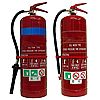 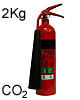 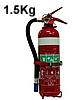 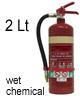 |
|
Water
|
||
|
[white]
|
Dry Powder
|
|
|
Wet Chemical
|
||
|
Foam
|
||
|
Carbon dioxide
|
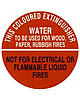
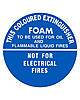
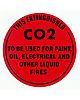
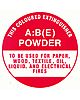
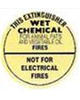
The AS2444 fire standard also insists that each extinguisher has an ID sign placed immediately above the extinguisher, which uses similar colours and has a brief description of the types of fires it can be used on.:
How do you decide which extinguisher to put where?
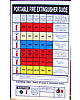
There is an Australian fire standard (AS2444) which covers this topic. The most important factors that influence what fire extinguisher you should use,are the likely source of a fire, and how much area the fire extinguisher is expected to service (square metres of a room). Sometimes it will be necessary to have more than one type of fire extinguisher in a room. For example a water or wet chemical fire extinguisher is dangerous to use on electrical (class E) fires- it could cause electrocution!. A carbon dioxide (CO2) extinguisher has only minimal ability on class A fires, the pressure that comes from it may even cause loose burning papers to fly up and spread the fire. A CO2 fire extinguisher used on a class F fire, say in a deep fryer, could fling burning oil all over the room. But it is perfect for electrical fires because the CO2 gas can make its way in and around computer boxes or behind switchboards.
It is therefore important for staff to get proper training on which fire extinguisher to use, where. Most Councils require a certificate of compliance, to ensure the right equipment is used, and placed in the right location. The AS2444 specifies the location of fire extinguishers and the location signs that must accompany them. Failure to comply could see you issued with a Fire Safety Order forcing you do work to make the building fire safe
 Further reading
- How do Fire Extinguishers Work?
- How to Save on Fire Safety services
- Where to put Fire Extinguishers
- Extinguisher Location Sign Mounting Heights (NSW Fire Brigade)
- American Fire Extinguisher types
- Fire Upgrade Assessments (Manly Council)
- Australian Standards for fire protection
- Transporting Diesel fuel regulations
- Contact us for Sydney Fire extinguishers full service and maintenance.

